
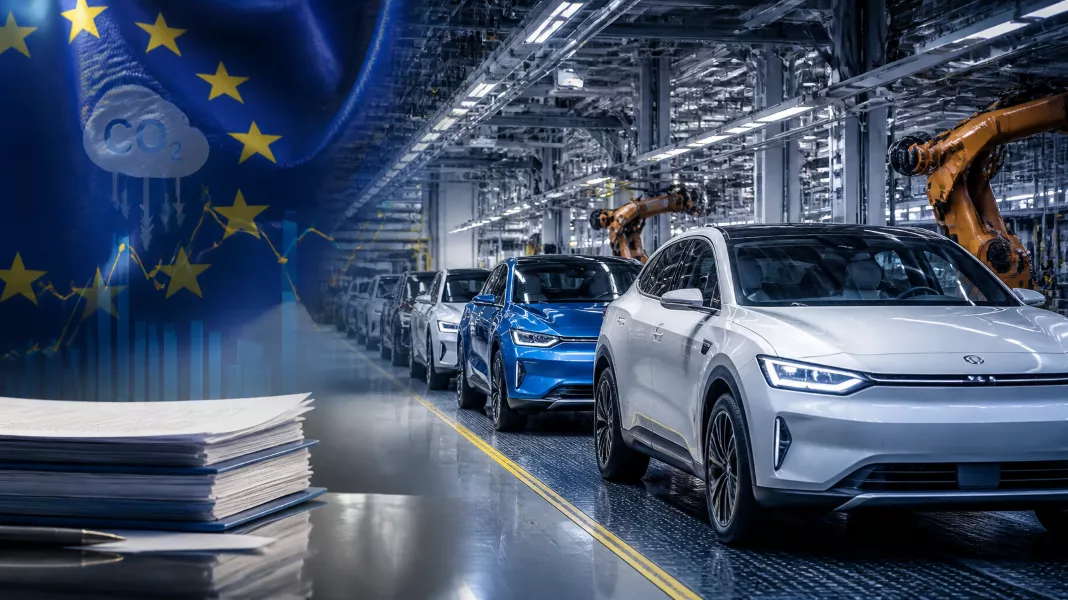
European Union lawmakers have reached an agreement to soften proposed vehicle emissions requirements for 2035, giving automobile manufacturers greater flexibility in meeting climate obligations. The deal would allow carmakers to offset part of their required carbon dioxide reductions through the use of low-carbon steel produced within the European Union.
The agreement reflects growing pressure on European policymakers to balance environmental commitments with the economic challenges confronting the automotive industry. As manufacturers face competition from international rivals, rising production costs and uncertainty surrounding electric vehicle demand, the proposed changes to EU car emissions targets 2035 signal a shift towards a more flexible approach to automotive decarbonisation.
EU Lawmakers Agree on Revised Emissions Requirements
According to a draft deal obtained by Reuters on October 20, three leading political groups of the European Parliament have reached a deal on a new emission reduction framework for new cars.
In its initial plan, the European Commission wanted a reduction of 90% in car CO2 emissions in 2035 from the levels of 2021, leaving the remaining 10% to be reduced via other means such as low-carbon steel and alternative fuels.
The new deal means that car makers have to reduce emissions by 87.5%, with the other 7.5 percentage points being compensated through low-carbon steel produced in the EU.
The new EU car emission targets 2035 are just another revision of the initial ambitions of the bloc to achieve a 100% reduction of car emissions in the EU. This draft deal still needs official approval from the political groups to become the stance of the European Parliament, which will then have to agree on common legislation with the member state governments.
Van Emissions Targets Also Face Changes
This compromise proposal does not only involve passenger vehicles but will also lead to a change in emissions requirements for vans.
In terms of the proposed reduction of emissions in vans, the manufacturers will be required to ensure that CO2 emissions for new vans is reduced by 80% by the year 2035. By the year 2030, the reduction target will be set at 35% compared to the 40% proposed by the European Commission.
As far as passenger cars are concerned, the proposed reduction target for 2030 will be at 55%.
These adjustments to EU car emissions targets 2035 and the associated van requirements are intended to provide manufacturers with more options for meeting regulatory obligations while continuing to reduce vehicle emissions.
Renewable Fuels and Electric Vehicles in Focus
The proposed agreement also suggests other ways for complying with the agreement on the part of automobile manufacturers. The vehicles running on renewable fuels could be classified as zero-emission vehicles under the proposed system.
Another way for complying with the agreement could be awarding super credits to those car manufacturers which develop very efficient electric vehicles or even tiny electric cars.
However, the proposed changes to EU car emissions targets 2035 do not eliminate the need for substantial emissions reductions. Instead, they would allow manufacturers to combine direct reductions with specified compensatory measures.
Automotive Industry Pressures Drive Policy Debate
Flexibility has been emphasized by European automakers given the increased manufacturing costs within the sector as well as increased competition from Chinese electric vehicle makers. The two countries that produce cars in large numbers, France and Germany, have supported the 90% cut in carbon emissions by 2035 without any additional demands.
The issue of EU car emissions targets 2035 reveals the dilemma of trying to protect jobs and manufacturing capabilities without ignoring the goals of reducing emissions.
This is not all because environmental concerns play an important role in this issue, as transport emissions are part of the overall EU climate change challenge. It will be seen how flexibility influences the rate of electrification of cars depending on legislation and response of manufacturers.
What Happens Next?
The accord struck between the three political factions is certainly a significant achievement, but it does not amount to a final piece of EU legislation. The political factions have to sign off on the document, after which negotiations between the European Parliament and the EU governments will lead to the final criteria.
For the car manufacturers, the potential EU car emissions targets 2035 could provide more flexibility when it comes to investing in electric cars, production technologies and other fuels. For the politicians, the question is how to make sure that the regulatory flexibility does not conflict with the climate agenda of the bloc.
The result will define the future course of the European automotive industry for at least a decade to come.